

How To Check If You Are Registered To Vote In Maryland
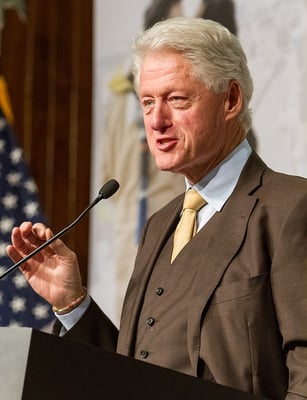
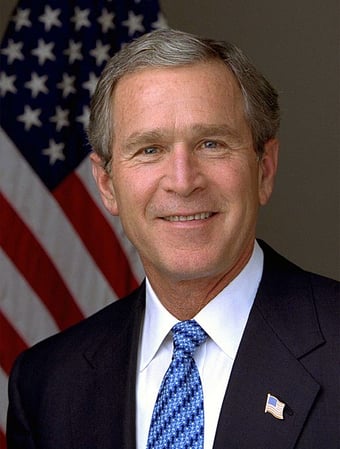
If yous've tuned into the news lately, y'all've seen the checks and balances organization of regime at work. Whether information technology's courts striking downwards executive orders or governors vetoing legislation, checks and balances are constantly working to proceed the United States government functioning. Simply what are checks and balances, exactly? And how practise they help make democracy work? Although information technology's of import for everyone to understand the checks and balances system, it's peculiarly critical for you to empathise if you lot're taking a authorities course. Additionally, since a organization of checks and balances plays an essential role in the U.Due south. federal authorities, the concept volition too be a heavy contender for an AP exam free response question. That's a lot to comprehend, huh? Not to worry, though! By the end of this guide, you'll have all the information you demand to Permit's get going! A system of checks and balances places limitations and controls on the power and responsibility of each branch of government. You probably already know that the United States government isn't the only authorities in the globe that depends on a system of checks and balances to part properly, but for our purposes, we're going to focus on how the organization of checks and balances functions in the United states of america' form of government. To actually understand why checks and balances are such a big deal in the Usa government, nosotros need to first with the post-obit: Understanding the history and background of our checks and balances government will lay the foundation for a checks and balances definition that yous tin utilize on the AP exam. Two cardinal influences shaped the Founders' decision to build a system of checks and balances into the United States Constitution: The overbearing behavior of the English monarchy inspired the 13 colonies to declare independence and influenced the Founders to form a government organization that was built on the ideas of liberty and liberty. They wanted to form a regime in the United States that guarded against the kind of overreach they'd witnessed in the English language regime. That'due south where the writings of Baron de Montesquieu came in. Montesquieu originated the political doctrine of separation of powers within a regime. (Spoiler alert: checks and balances are the result of this idea!) In his The Spirit of the Laws, Montesquieu argued for a ramble authorities comprised of three dissever branches. And these separate branches, Montesquieu argued, should take specific abilities to check the powers of the other branches. In other words, Montesquieu imagined a balanced government where no one branch was more powerful than the other. Montesquieu's philosophy heavily influenced the writing of the U.S. Constitution and the Founders' establishment of the three branches: the executive branch, the legislative co-operative, and the judicial co-operative. The Founding Fathers believed that implementing a system like this in the United States would help keep government power in check and allow citizens to have more freedom. The Founders' vision for a government that separated powers took the class of a constitutional republic. A constitutional democracy is a political system in which the federal government gets its say-so to govern from the people. (Actually, you can learn tons more nearly it ways to be a democracy in this article!) Only in full general, constitutional democracies like the United States are designed to do 2 things. First, their master job is to protect the cardinal rights of every citizen, regardless of economical condition, race, or course. Second, constitutional democracies limit the amount of government power through a series of limits established by the United States Constitution, which are more commonly referred to as "checks and balances." These checks and balances include things like: So what'south of import for y'all to remember about this description of a constitutional democracy? The large takeaway is that the system of checks and balances was written into the U.Due south. Constitution because the Founders knew it would be essential to the proper functioning of the Us' form of regime. But implementing a organization of checks and balances doesn't finish with writing information technology into the Constitution--that's only the beginning. The Constitution holds the three branches of the U.S. federal authorities responsible for adhering to the system of checks and balances. To add together to your working checks and balances definition, we'll explicate the three branches of the federal regime and how they piece of work within the system of checks and balances side by side. Checks and balances tin can work in many different ways and hold varying levels of importance in a regime that employs such a organization. In the U.S. Constitution, the three branches of the federal government were designed to operate separately and independently, only to be equal. In other words, no unmarried branch should have more power than either of the others. Here's how the system of checks and balances works in practise in the United States : 1 branch is given the power to take a given action, and another branch (or branches) is given the responsibleness to confirm the legality and appropriateness of that activity. That's just a fancy fashion of proverb that every time 1 branch makes a decision, it's the responsibleness of the other branches to evaluate it. The arrangement of checks and balances facilitates a reciprocal human relationship betwixt the different branches of the U.S. federal government. The 3 branches need each other—under the Constitution, the federal authorities couldn't fulfill its duties to the people without the proper function of each individual branch. To understand how the three individual branches work independently and together in a organisation of checks and balances, let's define and examine each branch next. The U.S. Capitol edifice The legislative branch of the federal government is established past Commodity One of the Constitution and is known every bit the United States Congress. Congress is in charge of creating laws and is made up of the Senate and the House of Representatives. The legislative branch is big: in that location are 100 members of the Senate, called Senators, and 435 members of the House of Representatives, called U.Due south. Representatives or Congresspersons. As the biggest branch of the federal government, Congress has a lot of responsibilities, which include: You might be gathering from the list of responsibilities in a higher place that the legislative branch'due south overarching responsibleness is creating, providing for, and controlling: they draft laws, pass bills, make rules, declare things, and make certain that the other branches are following the rules. In other words, they legislate. The U.Due south. White Firm The executive branch of the federal regime is established by Article Two of the Constitution and is made upwards of the president, the vice president, the Cabinet, executive departments, contained agencies, and other boards, commissions, and committees. When we hear the discussion "executive," a powerful individual in a well-tailored conform might pop into our minds. Just considering the President of the United States is the caput of the executive branch doesn't mean they're a lonely wolf, though. All of the other members of the executive branch support and suggest the president, and really do a lot of the work in the executive branch. The Cabinet is comprised of the vice president and the heads of the fifteen executive departments. These section heads have titles similar "secretary," "director," or "ambassador," and they're in charge of everything from the Section of Homeland Security, to the Department of Transportation, to the Department of Didactics. For example, the Secretary of Land and the Secretarial assistant of the Treasury are both heads of their respective departments and members of the president's Cabinet. The Secretarial assistant of Country advises the president on strange affairs, and the Secretary of the Treasury advises the president on economical affairs. The Cabinet may also be asked to advise the president on responsibilities or decisions that pertain to executive checks on the other two branches, or the executive branch's response to checks initiated by the other two branches on the executive co-operative. This is ane key way that the president receives both back up and accountability in carrying out the duties of the executive branch. At present that you know who makes up the executive branch, permit's look at the executive branch'due south central responsibilities: You're probably gathering from this list that the executive branch'due south main role is to implement and enforce federal laws. Information technology's called the "executive" co-operative for a reason, right? The executive branch executes: information technology makes sure that the correct stuff gets done. It puts plans into action and carries out different laws and orders. The U.Due south. Supreme Court building The judicial branch is established by Article Three of the Constitution, and information technology's the judicial branch'south job to evaluate, translate, and apply laws. The judicial branch is made upward of three different courts: the Supreme Court, the Appellate Courts, and the Commune Courts. Let'southward await at what each of the three courts within the judicial branch can practise. The Supreme Court is the highest federal courtroom in the United States and is the caput of the judicial co-operative. It's fabricated up of ane Chief Justice and viii Associate Justices. Appointments to the Supreme Court are made for life, so when the President nominates justices and the Senate approves them, information technology'southward a really big deal. The Appellate Courts--besides chosen courts of appeals--are the intermediate courts of the U.S. federal court system. There are thirteen of them, and they serve every bit a sort of go-betwixt for the Supreme Court and the more numerous District Courts. The Appellate Courts hear appeals from the District Courts and, when appropriate, appeals court decisions to the Supreme Courtroom. The District Courts are the final component of the judicial branch. The District Courts are where federal trials happen, which is a big responsibleness, as at that place are 94 juridical districts in the The states. Their jurisdiction covers both civil and criminal federal cases. Now that you know almost the different courts that brand upward the judicial co-operative, here are the primary responsibilities of the judicial co-operative: You can probably tell from the language used in the listing of responsibilities in a higher place that the Judicial branch'due south primary responsibleness is dealing with estimation : the Judicial co-operative interprets laws, policies, cases, testimony and evidence through the Constitution. The arrangement of checks and balances works like gears in a car. Information technology takes the work of all three branches of government in unison to go along the state running. Now you know virtually the iii branches of government: who the cardinal players are, what they practice, and why they exercise it. Examining the checks and balances that are assigned to each individual branch is the next step to getting you better acquainted with how each branch works. When we described the responsibilities of each co-operative in the previous sections, we were simultaneously describing how they cheque the other branches of the federal government. Only nosotros think it might be easier to envision how those responsibilities office explicitly as checks and balances if we identify them side by side in a tabular array. If you're a visual learner, this is for you! Looking at all of the checks and balances in ane identify can also help you think critically about the reciprocal human relationship between the dissimilar branches and the specific ways that they work together on dissimilar topics, bug, and areas of the federal government. To give yous a ameliorate idea of how the branches work together to bank check each other, we've laid out the unlike checks and balances in a tabular array beneath. Each row explains how the branches of government check and residuum each other around a specific topic. Let'south accept a look: Legislative Branch Powers Executive Branch Powers Judicial Co-operative Powers Creating Laws Foreign Treaties Implementing and Interpreting Laws Official Role Appointments State of war Appointing Judges and Justices Executive Branch Actions Whew! That's a lot of checks and balances and political jargon. Let's brand sense of all this info by identifying some pros and cons of how the powers and responsibilities are distributed in the U.S.'southward version of the system of checks and balances. At present yous take a visual for how checks and balances are assigned and distributed among the three different branches of the U.S. federal regime. But what does this all mean? First, it's important to recognize that the different branches of the federal government aren't in some kind of combative relationship because of the system of checks and balances. They don't human activity similar rival sports teams (ordinarily)! Instead, the powers and responsibilities assigned to each branch were intricately coordinated by the writers of the Constitution and then the government would operate collectively in the best interest of the people. But information technology's a fact of political life that no regime system is perfect in practise. On the AP test, you might be asked to explain or analyze an instance in which the organization of checks and balances didn't practice its job, or perhaps to analyze a situation when the system of checks and balances worked to the advantage of U.S. citizens. In society to practise this, you lot'll need to understand some of the pros and cons of the U.South.'s checks and balances arrangement and then you can give a stellar checks and balances definition and clarify and explain checks and balances examples on your own. Check out our listing of 5 pros and cons of checks and balances below to help grow your understanding of how the system can piece of work in action. Nosotros're bringing this 1 up again considering it's the main concept behind implementation of a system of checks and balances: checks and balances guard confronting tyranny and abuse of power past preventing an individual or small group within the government from seizing too much ability. Nosotros see this exemplified best in the human relationship between the legislative, executive, and judicial branches where creating and passing laws is concerned. The legislative branch tin propose bills or laws, the executive co-operative can veto them, the legislative branch tin can override the executive veto through a two-thirds vote, and the judicial co-operative tin declare laws unconstitutional. In the procedure of passing legislation, then, no 1 individual or branch tin grab an undue corporeality of ability, and that's one of the things that the organization of checks and balances does best. It distributes ability every bit evenly equally it can amidst the different branches of the government. What's key in thinking nearly checks and balances as an of import style to preclude tyranny is that they make the government to check itself and limit its ain influence. Though it isn't fun to think about the possibility of our government condign tyrannical, the organisation of checks and balances prevents any self-interested minority within the government from grabbing too much power and acting only in the interests of its group. On the flip side, smaller factions or groups in the minority within the government are always going to keep a close eye on the grouping that's in the majority. They'll be eager to make sure the majority group aren't getting up to any funny business organization. If there are corrupt practices going on in the majority, the minority groups in the regime volition certainly call those out. Political parties are a classic example of how self-regulation can occur in the government. For example, when the Republican party holds the majority in the House or the Senate, the Democrats in the House and the Senate are actress vigilant virtually keeping the Republican majority in bank check. Loyalty to political parties presents plenty of challenges to the system of checks and balances, but the inherent competition between the dissimilar political parties represented within the legislative branch can often serve to bank check the power of self-interested groups. Checks and balances enable the iii branches of government to disagree. In a system that separates ability amid different institutions comprised of many dissimilar people, multiple minds piece of work to interpret the Constitution. And when multiple minds are doing that interpreting, disagreements about what is and is not constitutional tin can arise. That might seem combative and counterproductive to getting things done in the regime, but the ability for the different branches to disagree is in the interest of the liberty of the people. When the different branches of the regime have the opportunity to work through disagreements nigh diverse decisions that affect the people, decisions are made more deliberatively. And the government has the power to brand huge decisions, so the slower stride of controlling enabled past the system of checks and balances tin can assistance ensure that these decisions are the best ones. The flip side of constitutional back up for disagreements amongst the different branches is that policymaking can be much more fourth dimension consuming. Ane co-operative can propose a law, some other can veto it, and some other tin can say that that law violates the Constitution, and and then on. Sometimes the three branches won't agree and a stalemate volition ensue . . . meaning no policy changes occur, or they're put off for a long time. This can exist a proficient thing in some cases, peculiarly when there is a majority in the House and the Senate who only have the interests of 1 party or ideology in mind in policymaking. But sometimes the people want change, and the principal thing continuing in the mode of changes occurring is the different branches' uses of the organization of checks and balances. Interpreting the Constitution has proven tricky every bit the Usa has grown and inverse. For example, the writers of the Constitution couldn't take predicted the U.s.a.' massively expanding population, the technological revolution, or global conflicts like World War I and Earth State of war Two.. All of these changes affect the way the Constitution is interpreted--which includes how checks and balances are understood and implemented. This has led to internal conflicts within the three branches of authorities. There have been points in history where unlike branches accept tried to aggrandize their power across what was originally outlined in the Constitution, and sometimes, the branches have succeeded. For instance, to defend the U.S. and its economy against fascist foreign powers, President Franklin D. Roosevelt's New Deal restructured the federal regime and greatly expanded executive powers. So why is this a "con," exactly? Remember: the system of checks and balances exists to make sure that no one co-operative of government is stronger than the other. When one co-operative tries to aggrandize its power, it runs the hazard of throwing the "balance" part of the "checks and balances" process out of equilibrium. That opens up a chance for an overreach of ability, which tin potentially put citizens' freedoms at risk. Former President Nib Clinton, who was the President of the Us from 1993–2001 To actually hone your agreement of checks and balances, examples are essential! Checks and balances can play out in interesting ways in real-life situations, so we're going to summarize and break downward one instance for you lot to reference here. The case we're going to wait at is the Line Item Veto Act of 1996 , which led to a Supreme Court case involving President Bill Clinton in 1998. This example is kind of a doozy—the checks and balances enacted by all three branches in this situation played out over a decade . . . and the Line Detail Veto Act nonetheless failed to win approval in Congress and become law. Permit's get into the details of the Act and the case and see what information technology can teach u.s. about checks and balances. The Line Item Veto Act of 1996 allowed the president—Bill Clinton, at that time—to veto parts of bills selectively, rather than vetoing bills in their entirety. The chief purpose of this Human action was to requite the president more than control over the details of the federal budget--a power that was constitutionally reserved for Congress. Congress successfully passed this legislation in 1996. How did that happen? Well, in the federal midterm elections of 1994, Republicans took over the Firm and the Senate from Democrats. This was seen every bit a pretty big upheaval. It's fifty-fifty been called the "Republican Revolution!" The Republicans too succeeded in taking the majority in Congress past making a pretty hefty entrada promise to the American people in the grade of the "Contract with America." The Contract with America was basically a long list of deportment the Republican candidates promised to take if they gained control of Congress. The Line Item Veto Human action was a key piece of the Contract with America. The American people liked this Act because information technology promised to ensure congressional financial conservatism. In fact, they had that in common with then-President Clinton: the simply provision in the Contract with America that he was willing to support was the Line Particular Veto Act. Since Republicans controlled Congress, and since the president supported the Line Particular Veto Act, it passed both the legislative and executive branches without being vetoed or rejected. And then things started to get a scrap ugly. In the time that the Line Particular Veto Act was law, President Clinton did a lot of line detail vetoing. In fact, he applied the line-item veto to the federal budget 82 times. Does that audio similar a lot? It did to the people who were affected by the president's line-item vetoes, and that'south where the checks and balances started coming into play. When the Act was passed in 1996, lots of Democrats broke with President Clinton to oppose information technology. A congressman even sued to prevent use of the line-detail veto. At the time, the Supreme Court held that the congressman'south case lacked standing because he couldn't requite any specific examples of how the Line Item Veto Human activity was causing impairment to people. But when President Clinton began using the line-detail veto a little more than liberally, more people filed adjust. Since Clinton was making ample apply of his new power, this time, the plaintiffs had specific examples of how the line-item veto was causing harm. The City of New York itself and several other healthcare organizations declared fiscal injury from President Clinton's counterfoil of various provisions from Acts that were passed in 1997. The example—Clinton five. Metropolis of New York—went before the District Courtroom, and the Court ruled in favor of the plaintiffs. This time, the Courtroom held that the Line Item Veto Act was unconstitutional. The District Court and so used its power to entreatment to the Supreme Courtroom. The case was headed to the highest federal court in the United States. In 1998, the Supreme Court ultimately ruled that the Line Item Veto Act violated the Presentment Clause of the Constitution, which outlines a specific practice for enacting a statute that the Human activity did not follow. The Supreme Court used their ability of interpretation to rule that the Constitution expressly prohibited the actions that the Act enabled the President to have. The majority of the Supreme Court, in other words, believed that the Act violated principles of the separation of powers and threatened individual freedom by giving the President the power to reward or favor certain groups and punish others. Former President George West. Bush, who was President of the United States from 2001–2009 In 2006, the Line Item Veto Act came upwards once again. That yr, President George Westward. Bush asked Congress to enact legislation that would return the line item veto ability to the executive branch, and announced his intent to make this asking in his State of the Marriage Address. In March 2006, President Bush sent a legislative proposal to Congress and urged its prompt passage. Anticipating dissent from some members of Congress and the Supreme Court, members of President Bush'southward Cabinet argued that his version of the Act was different from the Line Particular Veto of Human activity of 1996 because the new proposal would seek congressional approving of all line-item vetoes, instead of giving the executive unilateral potency for such vetoes. Many members of Congress didn't buy this statement. Some still believed that the legislation would take away parts of Congress's constitutional power and requite information technology to the executive branch instead. Later on hearing arguments from ramble constabulary experts about the constitutionality of the bill, the Firm Budget Committee approved the proposed Act through a majority vote. The full Firm of Representatives voted and approved the aforementioned bill shortly after, just it failed to win approval in the Senate. Just because the Act didn't win full blessing by Congress, the Legislative Line Item Veto Human activity of 2006 didn't go police force. If you lot were paying attention, y'all may have picked out some of the checks and balances that were involved in the whole scenario surrounding the Line Particular Veto Act. To help y'all out, hither's a list of the checks and balances that nosotros establish playing a role in this legislation: The Line-Particular Veto Act of 1996 is a great example of how we tin understand the federal government's powers equally being both divided and shared. In some aspects of this case, branches used their powers to piece of work together to keep another branch from doing something that was non constitutional and that potentially threatened the freedom of the people. Past checking each other in this case, the different branches also defended their ain constitutional powers past preventing the executive branch from claiming powers that the Constitution assigned to the legislative co-operative. This example shows how existent-world cases of checks and balances in activeness have a lot of layers: in that location's a lot to analyze and unpack, and sometimes who's right and who's incorrect isn't easily defined. That's why it's of import to look at both the big picture situation and all of the details, which is fundamental to making sense of checks and balances in activeness! This is only an overview of how checks and balances work inside the Us government. (Nosotros know...it's a lot!) At that place's a lot more to learn about how each private branch checks the other. A good place to start is learning more than about how the Executive co-operative checks the Judicial branch. The AP U.Southward. Authorities exam is near more than just how the federal government works, though. That'due south why nosotros've developed the all-time 5-step guide to help you prepare. Once you've worked your way through that, it's time to drill deeper into the material you demand to know to ace the test. Hither's a list of the best AP U.Due south. Authorities notes on the internet, and here'south a step-by-step guide to acing the AP U.S. Government's FRQs.
What Are Checks and Balances? Definition and History
Where the Idea of Checks and Balances Comes From
A Ramble Democracy: The Vehicle for a Organization of Checks and Balances
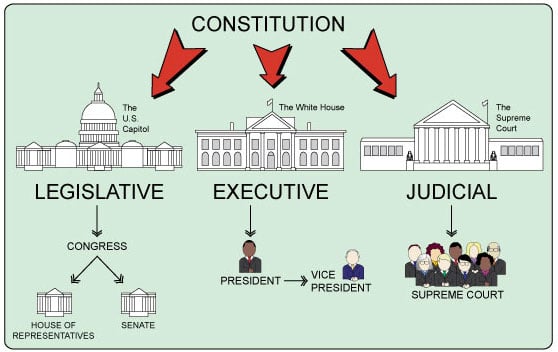
The 3 Branches of the United States Federal Government
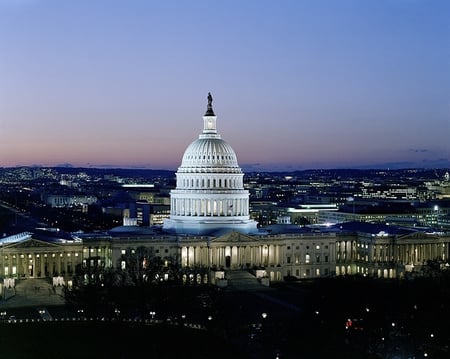
The Legislative Branch
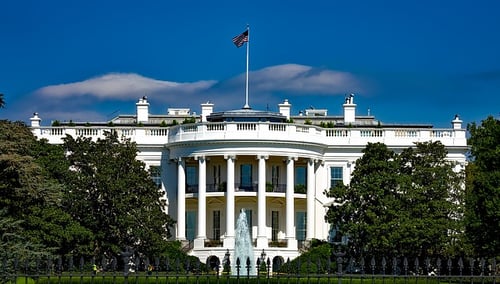
The Executive Co-operative, Defined
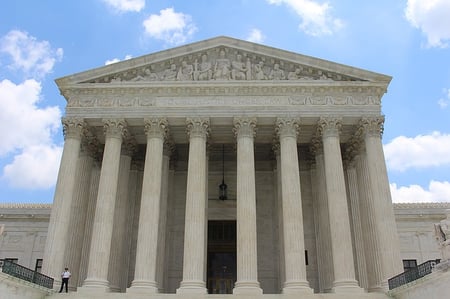
The Judicial Branch, Defined
The Supreme Courtroom
The Appellate Courts
The District Courts
The Judicial Branch'southward Responsibilities
How Does the Checks and Balances Organisation Work in the Us?
Checks and Balances of the 3 Branches of Government
5 Pros and Cons of a Checks and Balances System
Pro: They Keep a Single Grouping From Grabbing too Much Power
Pro: They Go the Regime to Cocky-Regulate
Pro: They Provide Constitutional Support for Disagreements Between the Branches
Con: They Tin Complicate Policymaking
Con: The System Doesn't Always Work equally Originally Intended
What Are Checks and Balances Like in Action?
The Line Item Veto Act of 1996: Background
The Judicial Branch Acts
The Legislative Branch Acts
Summary of the 4 Checks and Balances Involved in This Instance
What's Adjacent?

Ashley Sufflé Robinson has a Ph.D. in 19th Century English language Literature. As a content writer for PrepScholar, Ashley is passionate near giving college-spring students the in-depth information they need to get into the school of their dreams.

Source: https://blog.prepscholar.com/checks-and-balances-definition-examples
Posted by: hughesconsel.blogspot.com
0 Response to "How To Check If You Are Registered To Vote In Maryland"
Post a Comment